

Loading
Big Data Analytics
The Big Data Analytics group develops software and methodology to build a microscopic resolution 3D model of the human brain, which includes detailed information about the spatial arrangement and the properties of neuronal cells and nerve fibers, and highly precise 3D maps of brain areas.
This requires microscopic imaging and analysis of large quantities of histological brain sections, leading to image datasets at the Petabyte scale.
At the intersection of neuroinformatics, computer vision and artificial intelligence (AI), our research addresses:
- Data and workflow management for high throughput microscopic imaging,
- Machine learning and computer vision algorithms for biomedical image analysis on high performance computers,
- Software development for structured remote access to large image datasets and interactive 3D exploration of high-resolution brain atlases over the web
To analyze these petabyte-scale datasets and relate information across imaging modalities, our team “Large-scale AI for Brain Mapping” develops scalable AI methods for brain mapping that are designed for high-performance computing environments.

We are embedded in an interdisciplinary network of partners. As part of the national AI community, we host the research group of Helmholtz AI for the research field “Information” in Jülich. We coordinate the development of brain atlas services for EBRAINS, an open European infrastructure for brain research that was co-developed by neuroscientists across Europe in the Human Brain Project (HBP) , a European Future and Emerging Technologies (FET) Flagship project that ran from 2013 to 2023, and is now continued as EBRAINS2.0. In the BigBrainProject we work closely with neuroscientists and machine learning experts in Montréal, Canada. We also collaborate closely with the Jülich Supercomputing Center (JSC), University of Koblenz, and Heinrich-Heine University Düsseldorf.
Topics of our Research
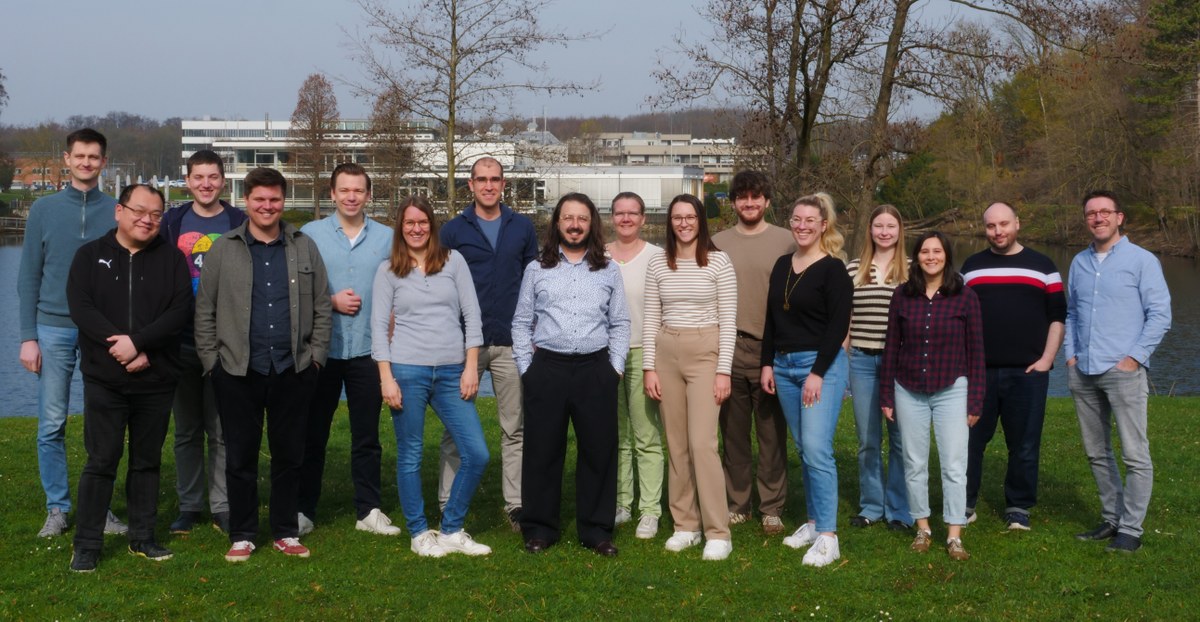
Our Staff
Selected Publications
Last Modified: 20.07.2026